
Organisation and activities
Organisation
The Committee selects geo-engineers among ISSMGE who would be ready to volunteer and provide intervention. Geo-engineers should preferably be located in close proximity to the impacted area, and possess - or have the support of persons having - adequate knowledge of local context, language and culture.
Additionally, the Committee seeks to ensure that experts would be accepted by local colleagues and authorities, thus avoiding any diplomatic or political issue. Experts will be chosen within the ISSMGE membership, through direct contacts with GeoWB members, through TCs (with the Technical Oversight Committee) or through Member Societies (with support from regional Vice-Presidents).
In nations with no ISSMGE Member Society, alternative procedures need to be followed. In this regard, contacts could be made via the GeoWorld network which has members in most countries. Local contacts would be required, for obvious reasons, to cover logistical aspects such as speaking local language, interacting and connecting with local authorities, managing travel and accommodation issues, arranging local transportation.
GeoWB devotes special attention to the significant logistical work of organizing safe missions in remote areas, in conjunction with other organizations that have a great deal of experience of providing disaster interventions.
Regular on-line GeoWB meetings are held to discuss activities and perspectives, with also the presentation of the GeoWB missions recently made.
GeoWB members come from all ISSMGE regions and are able to speak the following languages: Arabic, Portuguese, Chinese mandarin, English, French, Farsi (Persian language), Greek, Indian, Indonesian, Italian, Japanese, Spanish, Turkish.
A call to Member societies has been made to get liaison members, invited to participate to all GeoWB meetings: Prof. Eduardo Botero-Jaramillo (Mexico), Eng. Sylvie Bretelle (France), Profs Darren Chian (Singapore) and Sabatino Cuomo (Italy), Dr. Jan Kupec (New Zealand), Profs Anthony Leong (Hong-Kong) and Enlong Liu (China), Dr. Luis Miranda (Portugal), Profs Andrei Olteanu (Romania), Viktor Nosenko (Ukraine) and Kshama Roy (Canada), Dr. Yue Xu (USA). Remaining member societies may still propose their liaison members.
Reports and missions
GeoWB activities are regularly described in the ISSMGE Bulletin. Various reports prepared by GeoWB members can be found in the thumbnail "Reports on geodisasters". Missions made by GeoWB members include:
- the Derna dams failures in Libya, made by A. Chraibi in 2023 for the International Committee On Large Dams (ICOLD) with the support of UNDRR (see the Wikipedia description here),
- the Mutilaka landslide in Papua New Guinea made by J. Kupec in 2024 within the framework of USAR (Urban Search and rescue) New Zealand, together with Australian colleagues,
- the disasters resulting from heavy rains in Rio Grande do Sul (Brazil) by F. Marinho in 2024, with the support of ISSMGE,
- the prevention of urban landslides in the City of La Paz (Bolivia), a support provided to the technical services of the Municipality of La Paz by F. Marinho and B. Caicedo in 2025, with the support of ISSMGE,
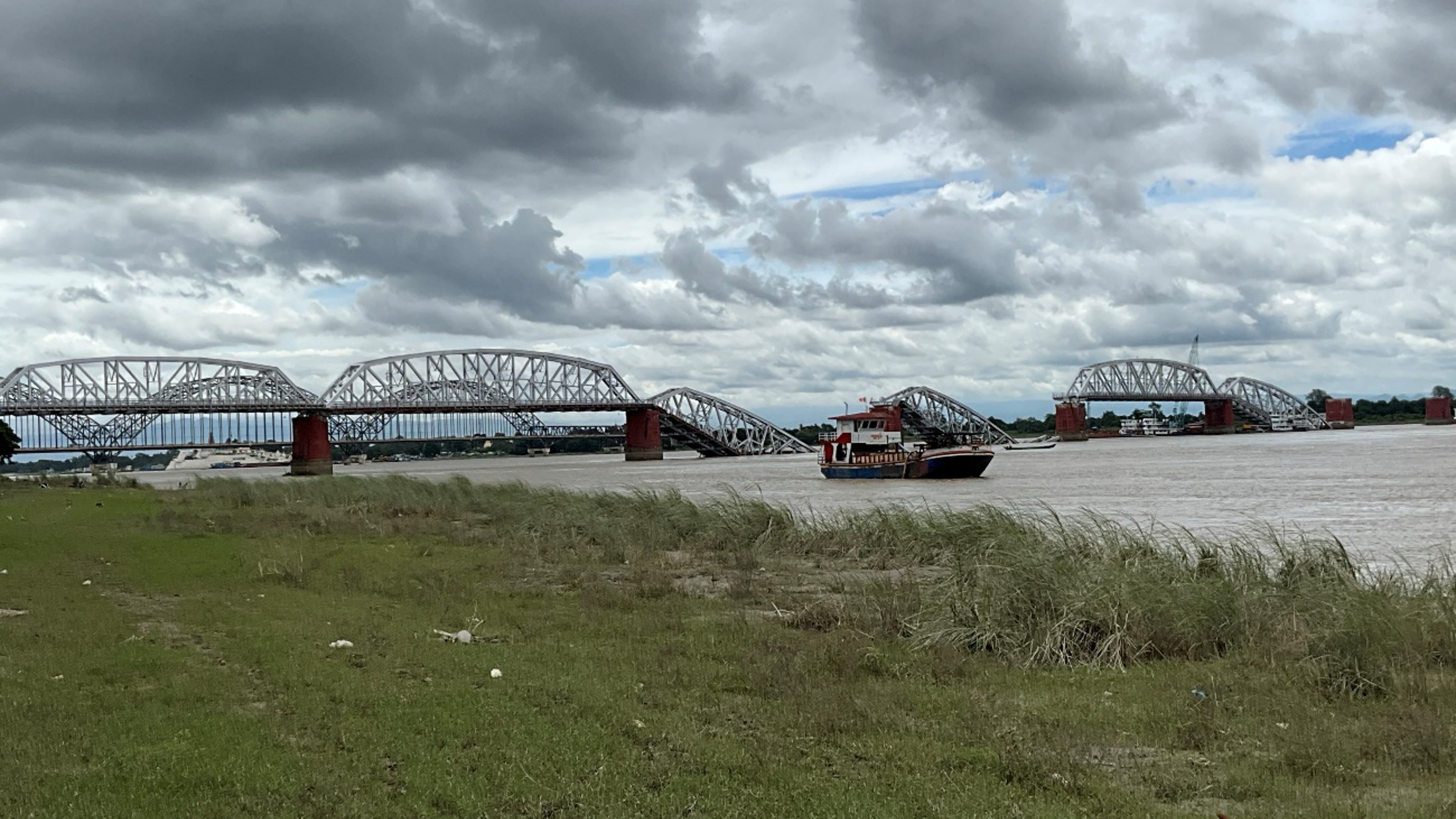
- the damage caused by the 2025 Myanmar earthquake, by H. Hazarika and his group, with the support of the Japanese Geotechnical Society,
- the rainfall induced disaster in the district of Mandi, Himachal Pradesh, India by N. Satyam in 2025, with local Indian support.
Among the lessons learned from these missions is the need of reliable and motivated local contacts, and, in the case of remote and unsafe countries, the need of ensuring the safety of geo-engineers through effective logistical supports by local authorities.
Activites
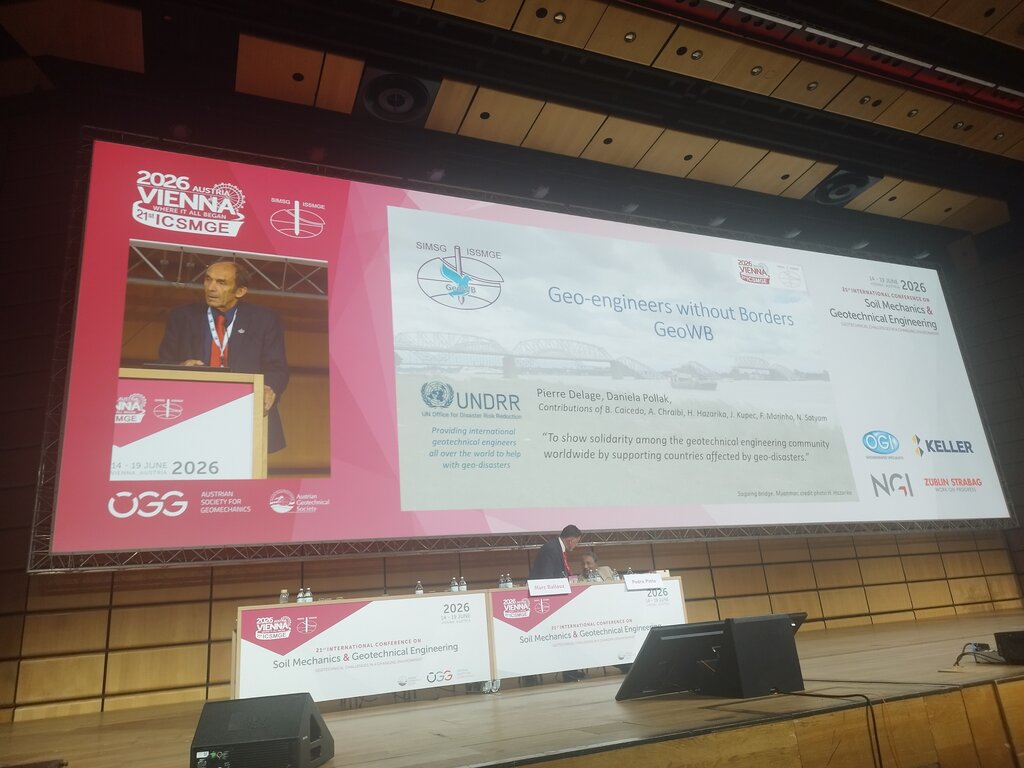
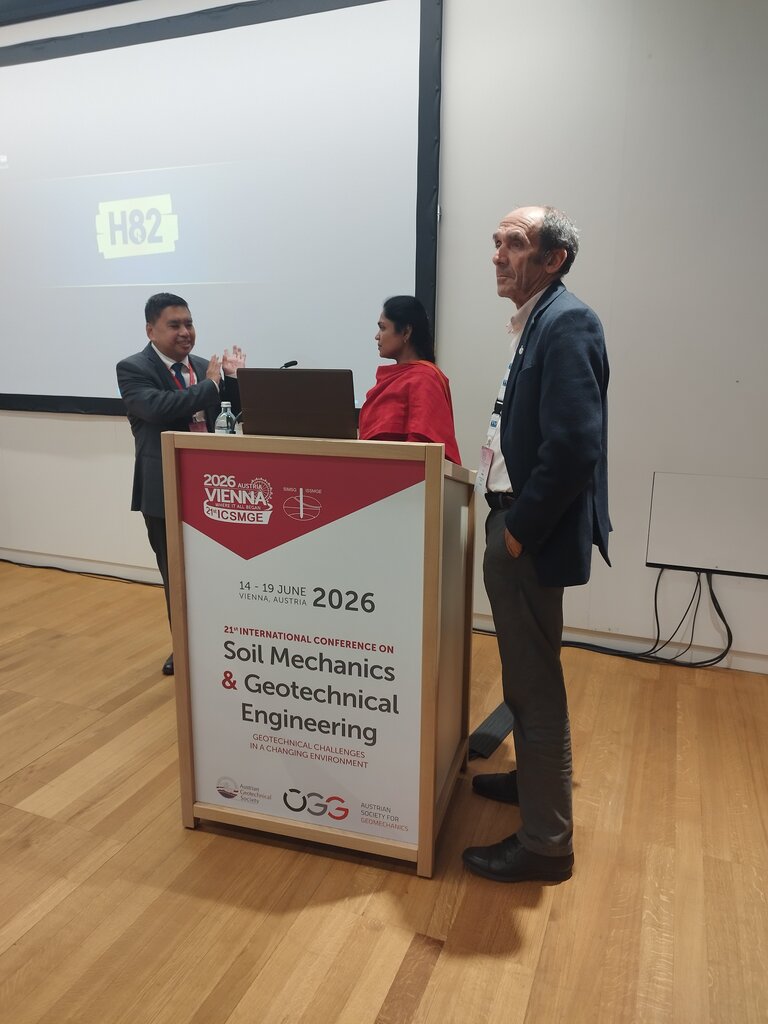
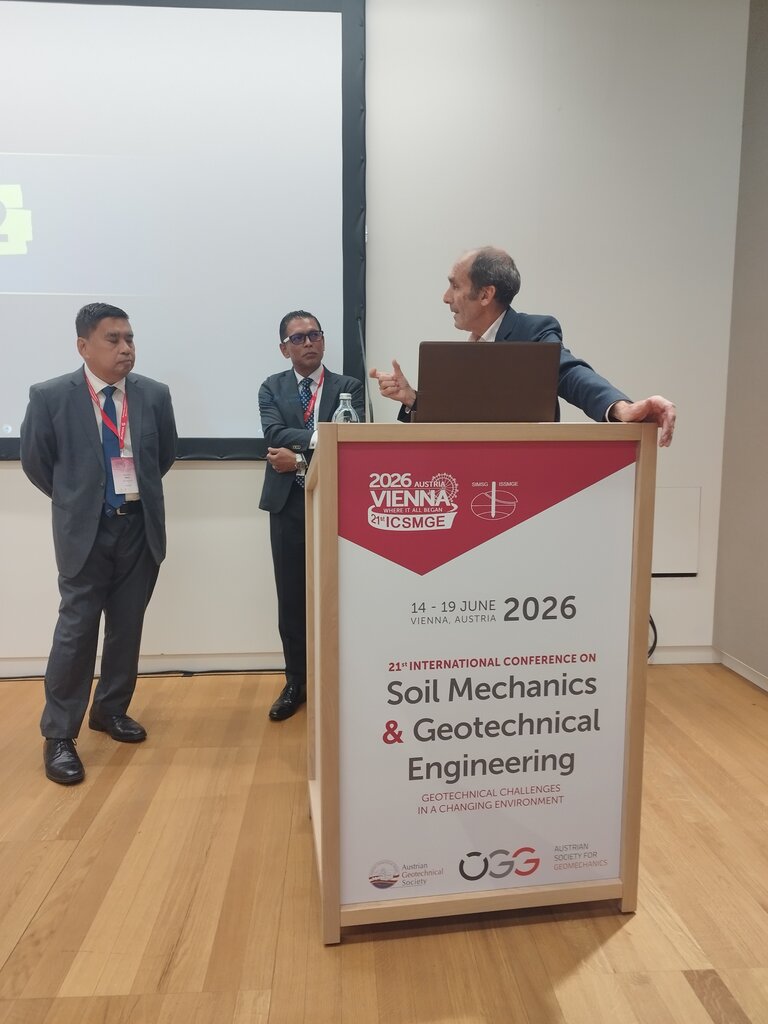
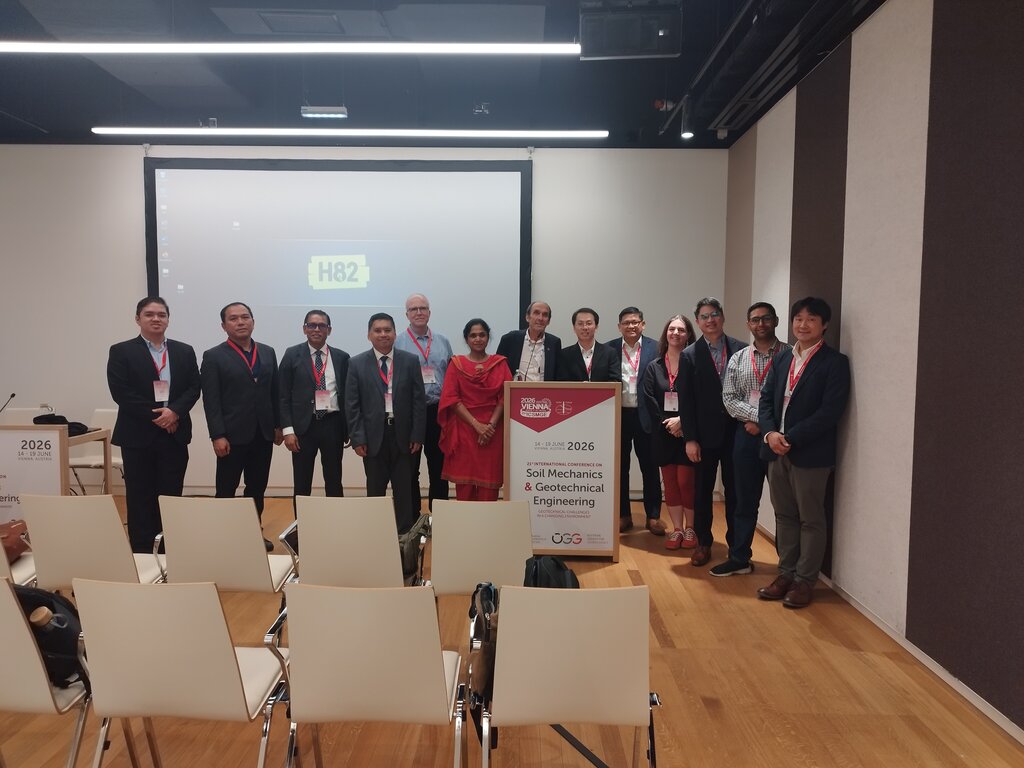
GeoWB, one of the committees of the 21st International Conference on Soil Mechanics and Geotechnical Engineering (ICSMGE 2026), presented its contributions and activities during the event. Below are some snapshots from ICSMGE 2026, held in Vienna, Austria, from 1419 June 2026.
 |
 |
 |
 |
A synthesis of the GeoWB activities during the term 2022 - 2026 can be found here.
Contact: [email protected]