 TC Chair: Gráinne El Mountassir
TC Vice-Chair: Julian Tao
TC Secretary: Rafaela Cardoso
Short name: Bio-Geotechnics (TC223)
GeoWorld Group: Bio-Geotechnical Engineering (TC223)
The overall goal of the Bio-Geotechnical Engineering Technical Committee is to support the global geotechnical community in translating sustainable and scientifically innovative biologically based approaches towards practically deployable industrial technologies and engineering design solutions.
TC 223 has four over-arching objectives:
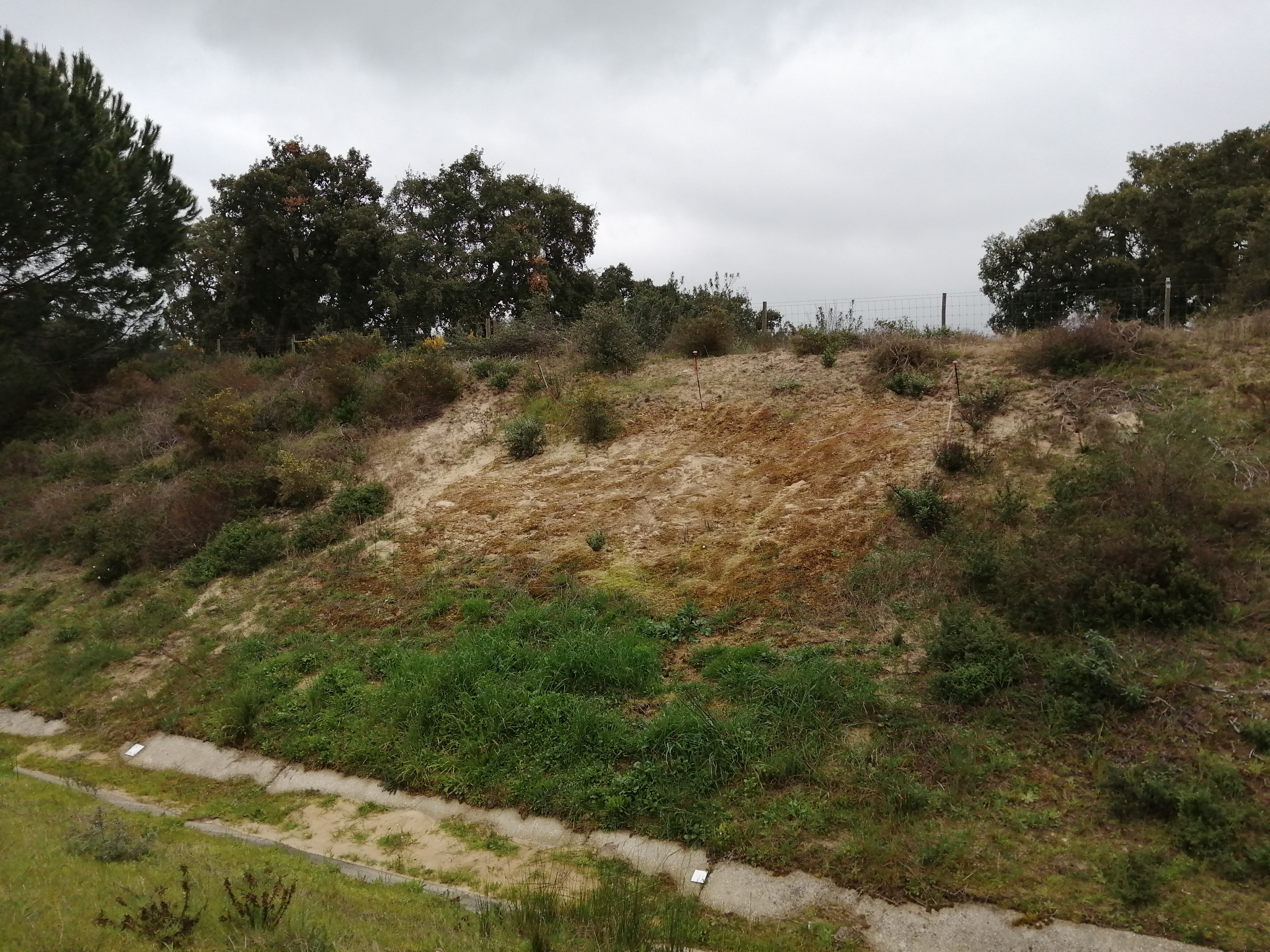
Objective 1. To disseminate knowledge and practice in the area of biogeotechnics including as examples: rooted soils, biocemented soils, the application of biopolymers and bioinspired geotechnical engineering.
Objective 2. To establish guidelines and technical recommendations in the field of biogeotechnics:
Objective 3. To promote biogeotechnics sessions at ISSMGE sponsored international and regional conferences on soil mechanics and geotechnical engineering, and to support specialist conferences and workshops on biogeotechnics.
Objective 4. To interact with industry and overlapping organizations working in areas related to Biogeotechnical Engineering.
To assit with its activities TC223 has four technology-focused task forces and 3 professional task forces, these are outlined below.
Technology-focused task forces
T.1. Living soils for geotechnical engineering
This task force will seek to disseminate research findings and practice, strengthen collaboration and ultimately advance the state of knowledge with respect to living soil systems; incorporating bacterial, fungal and plant-based systems in which the living biological component is expected to be sustained as a means of controlling soil hydraulic and mechanical behaviour.
T.2. Biocementation in geotechnical engineering
This task force will seek to disseminate research findings and practice, strengthen collaboration and ultimately advance the state of knowledge with respect to biocemented soils/rock, where minerals are precipitated in situ within soil or rock, incorporating processes including bacterially induced mineralisation, enzymatically induced mineralisation and fungally induced mineralisation.
T.3. Biological products for geotechnical engineering
This task force will seek to disseminate research findings and practice, strengthen collaboration and ultimately advance the state of knowledge with respect to biological products and their application in geotechnical engineering; incorporating for example biopolymers, biological fibres and biological waste products.
T.4. Bioinspired geotechnical engineering
This task force will seek to disseminate research findings and practice, strengthen collaboration and ultimately advance the state of knowledge with respect to bioinspired geotechnical engineering, incorporating for example bioinspiration applied to soil penetration and excavation processes, anchor and foundation design, ground improvement, enhanced geomaterial performance, earth moving and manipulation processes, slope stabilisation and erosion mitigation, hydraulic barrier systems and filtration.
Professional Task Forces
P.1. Academia- Industry Partnerships
This task force will strengthen academia-industry partnerships to achieve greater cooperation and facilitate the exchange of information, experience, knowledge on Biogeotechnical engineering, ultimately contributing to guiding technology development and deployment in practice.
P.2. Young members
This task force will support and actively champion young members engaged in Biogeotechnical engineering research and practice, highlighting and disseminating their achievements and insights across the global community.
P.3. Educating Biogeotechnical engineers
Biogeotechnical engineering is an interdisciplinary field drawing on a wide range of disciplines beyond geotechnical engineering including microbiology, chemistry, ecology, physics, geophysics. This task force will explore mechanisms to widen the knowledge base of graduate civil engineers to provide them with a sufficiently wide knowledge base to enable them to lead and support deployment of bio-based technologies in practice.
Past Meetings
1. Tuesday 19th May 2026 - TC223 Online Launch Meeting
2. Tuesday 16th June 2026 - TC223 Hybrid Meeting at 21st ICSMGE Conference, Vienna.